
Practical Guides to Living in Korea
Housing, healthcare, parenting, money and everyday Korean systems — explained by a Korean engineer dad.
- Korea Child Independence Fund 2027: Who Gets ₩1.2 Million, and Can Foreign Families Join?
 South Korea’s proposed Child Independence Fund could help children build savings for adulthood through government contributions and long-term investment. But how much support will your family receive, and can foreign residents participate? Here is a practical guide to the proposed income rules, financial risks, and preparations before the 2027 launch.
 - Sanhujoriwon in Korea: Do You Really Need a Postpartum Care Center?Postpartum care centers, called sanhujoriwon, are an important part of Korean childbirth culture. But are they worth the cost? This guide explains 2026 prices, early booking strategies, advantages and disadvantages, language barriers, government support eligibility, and practical alternatives for foreign parents.
- Which Loan Should You Repay First in Korea? A Guide for ExpatsThe highest-interest loan is not always the first debt you should repay in South Korea. For foreign residents, visa expiration, loan renewal restrictions, and upcoming lump-sum payments may be more urgent. This practical guide explains how to prioritize multiple loans, calculate early repayment costs, and avoid unexpected financial problems.
- Pediatric Clinics in Korea: Why the Morning Rush Happens and How Parents Can Avoid ItWhy do Korean parents line up outside pediatric clinics before opening time? Known locally as “pediatric open run,” this morning rush can make healthcare visits stressful, especially for foreign families unfamiliar with Korea’s booking systems. Learn when to seek urgent care, how to use the Ddokdoc app, what to do without a Korean registration number, and how to find pediatric care on weekends and holidays.
- Why Is My Korean Visa Taking So Long? Processing Delays ExplainedWaiting for a Korean visa can be stressful, especially when your flight, university semester, or job start date is approaching. This guide explains what “Under Review” means, where Korean visa delays happen, and what to do when your application takes longer than expected.
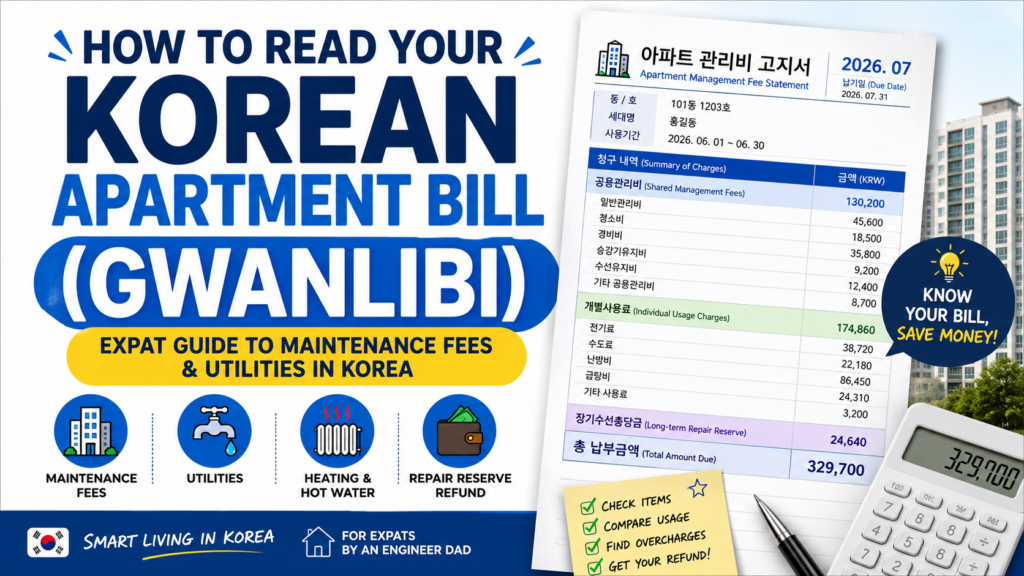
- How to Read Your Korean Apartment Bill (Gwanlibi): Guide for RentersA Korean apartment bill can look complicated because it may combine building management costs, household utilities, heating, and a long-term repair reserve. This guide explains the main items foreign renters should check and how to read the bill step by step.





Who is Engineer Dad?
I’m a Korean engineer, husband and dad living in Korea. I created this site to explain the Korean systems that can be surprisingly confusing when you first arrive.